Case study 04 · Product Ownership · UX/UI Design · AI-Assisted Development · Growth
CarCare Diary
Designing, building and growing an independent mobile product.
- Industry
- Consumer, Small business
- Platform
- iOS, Android
- Expertise
- Product Ownership · UX/UI Design · AI-Assisted Development · Growth
- Role
- Founder, Product Designer & AI-Assisted Developer
- Involvement
- 2025 - Present
- Metric
- 1,000+ users
01Overview
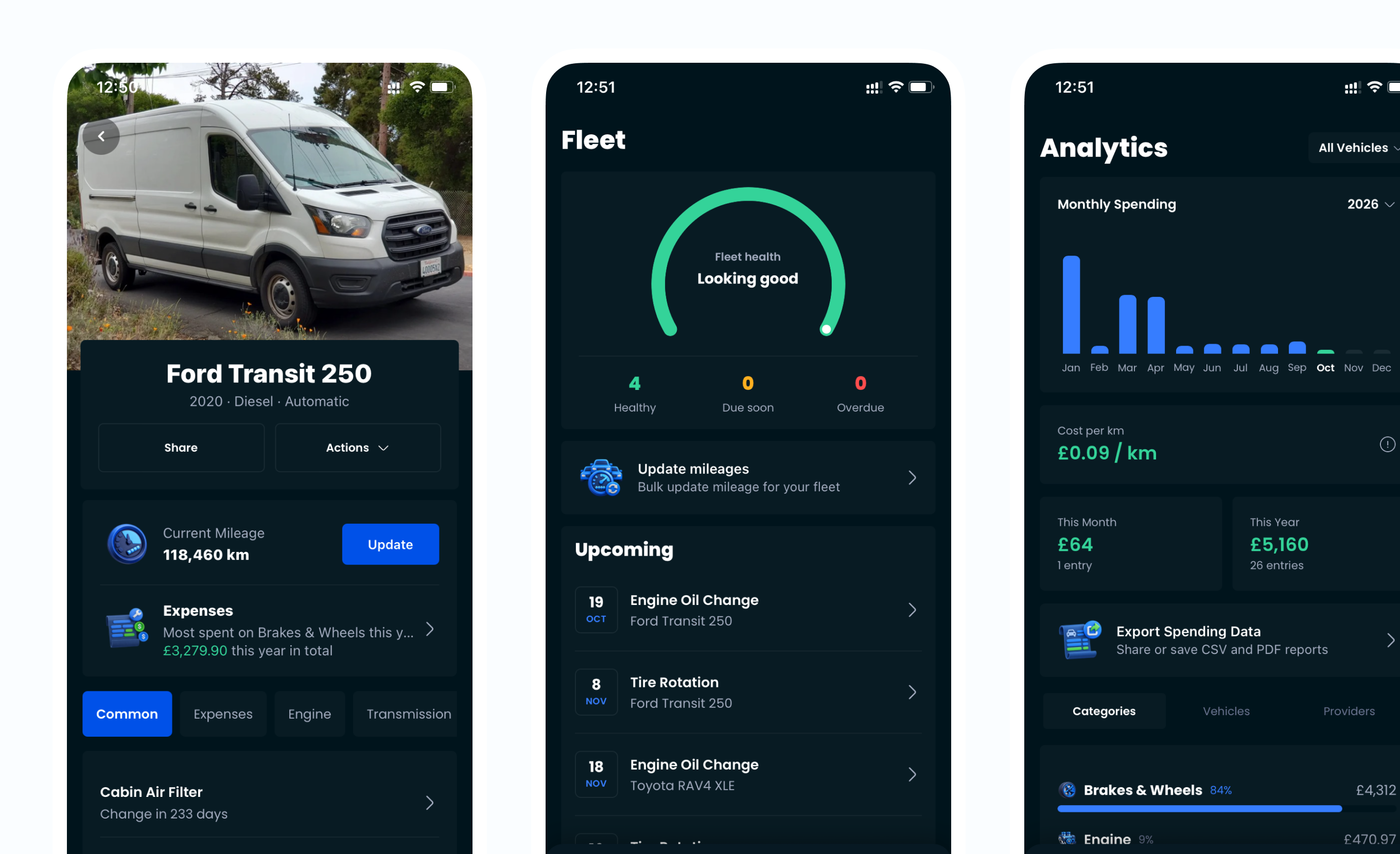
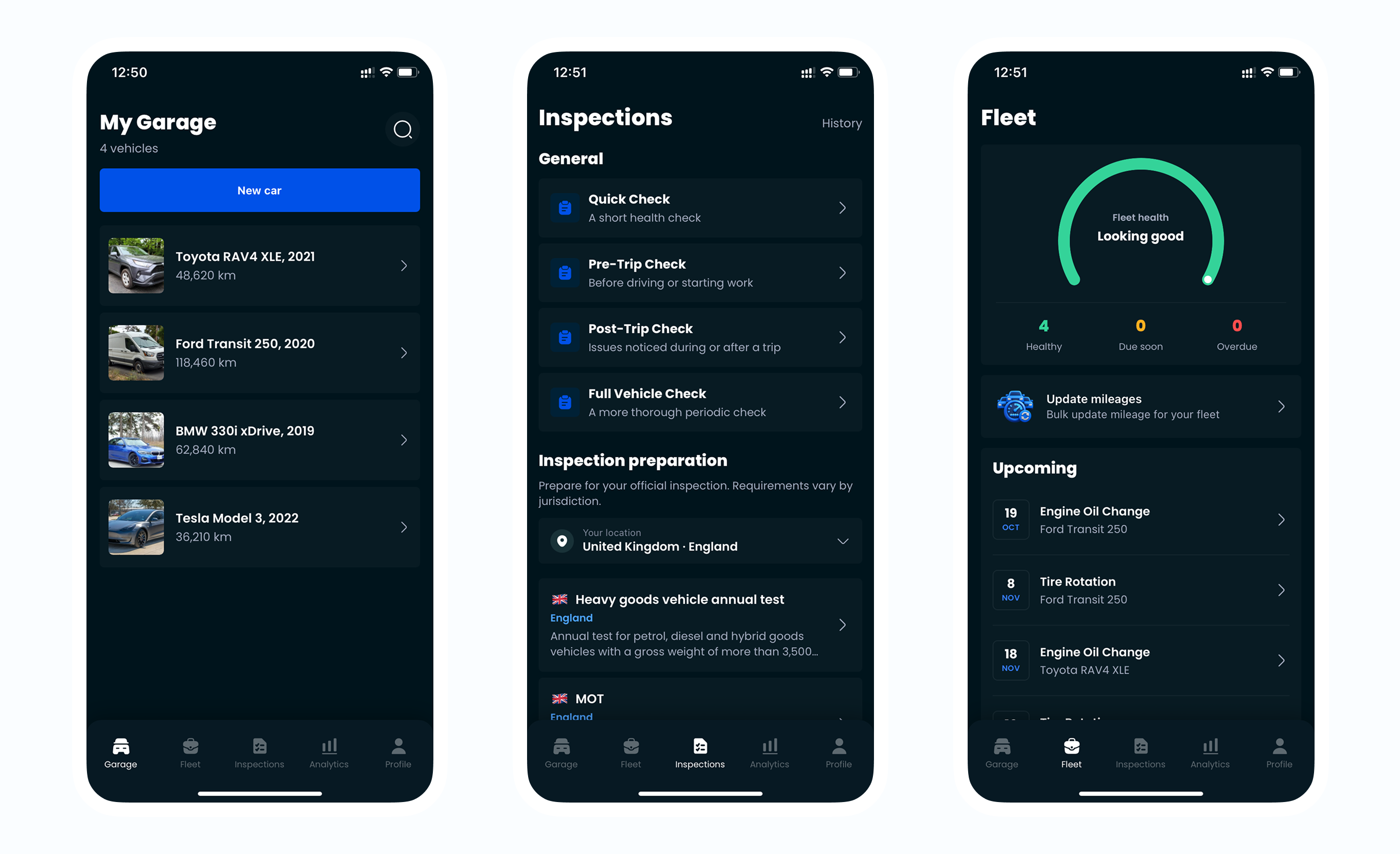
CarCare Diary is an independent mobile application I created to help individuals and small businesses manage their vehicles and keep essential records organised.
Unlike my agency projects, I own the entire product lifecycle - from researching the market and designing the experience to building the application, launching it, acquiring users and deciding what to improve next.
I began development in 2025 and launched publicly in 2026. The product is live on iOS and Android and continues to evolve through user feedback, product experiments and new business opportunities.
Scope
- Product strategy, competitor research and MVP scope
- End-to-end mobile UX/UI, flows and design patterns
- User interviews, feedback analysis and iterative redesign
- AI-assisted development with Cursor (React Native, Expo, TypeScript, Supabase)
- Authentication, subscriptions, releases and quality assurance
- Apple Search Ads, creative tests, custom product pages and ASO
- Localization, pricing experiments and behaviour analysis
- Small-business and fleet positioning, B2B landing pages
- Go-to-market research workflow (in development)
- Team
- Independent product - I own strategy, design, implementation and growth.
- Built with
- React Native, Expo, TypeScript, Supabase
02
From idea to product
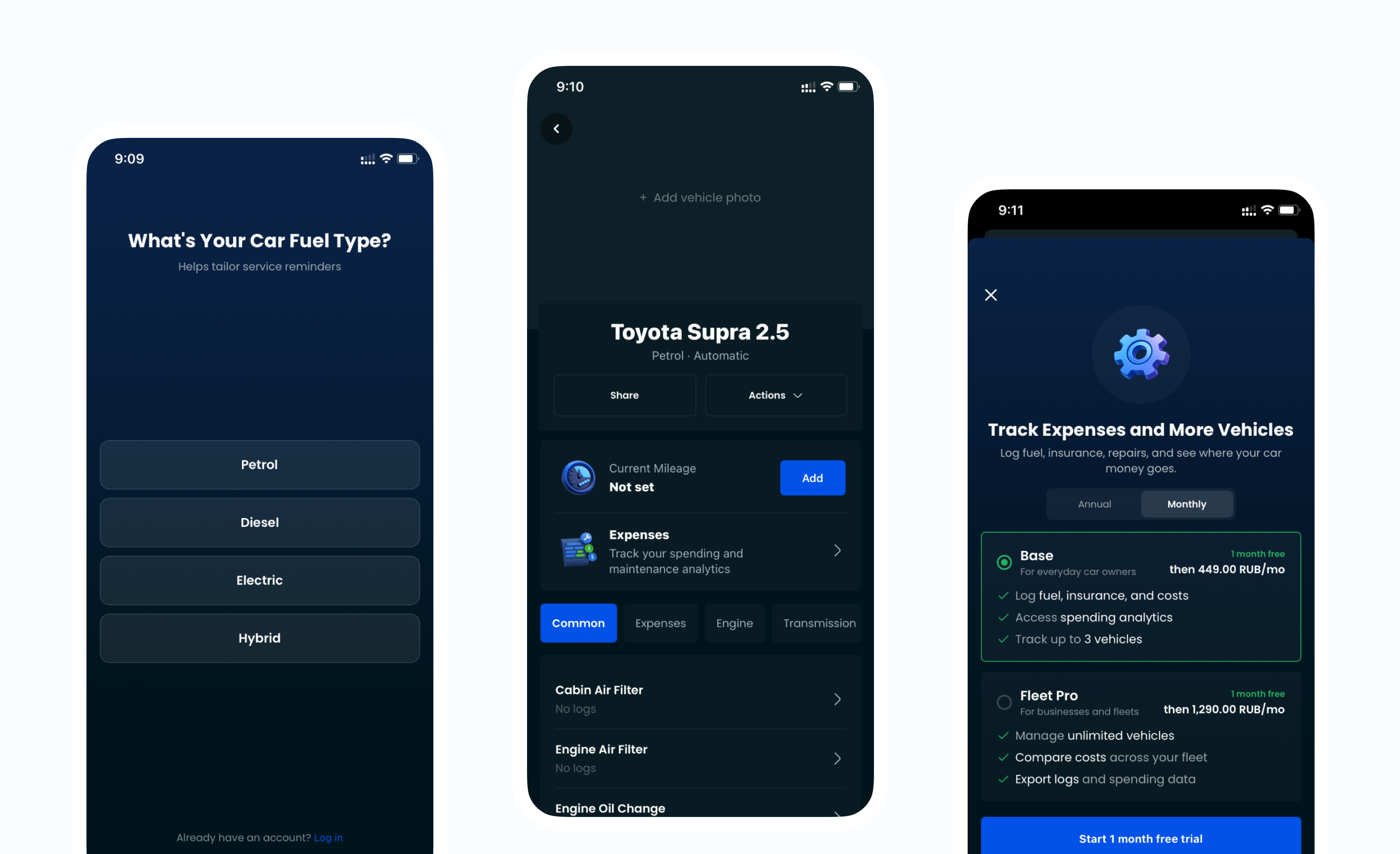
I started from a practical problem: vehicle information is scattered across receipts, messages and memory, and recurring maintenance is easy to defer until something fails.
I researched existing apps and habits, narrowed the opportunity to a record people would actually maintain, and defined an MVP that prioritised clarity over feature breadth.
I owned the information architecture, core flows, interface design and product direction - aiming to reduce the effort of logging activity and make the vehicle record feel like the centre of the product, not a side form.
03
Designing for continued use
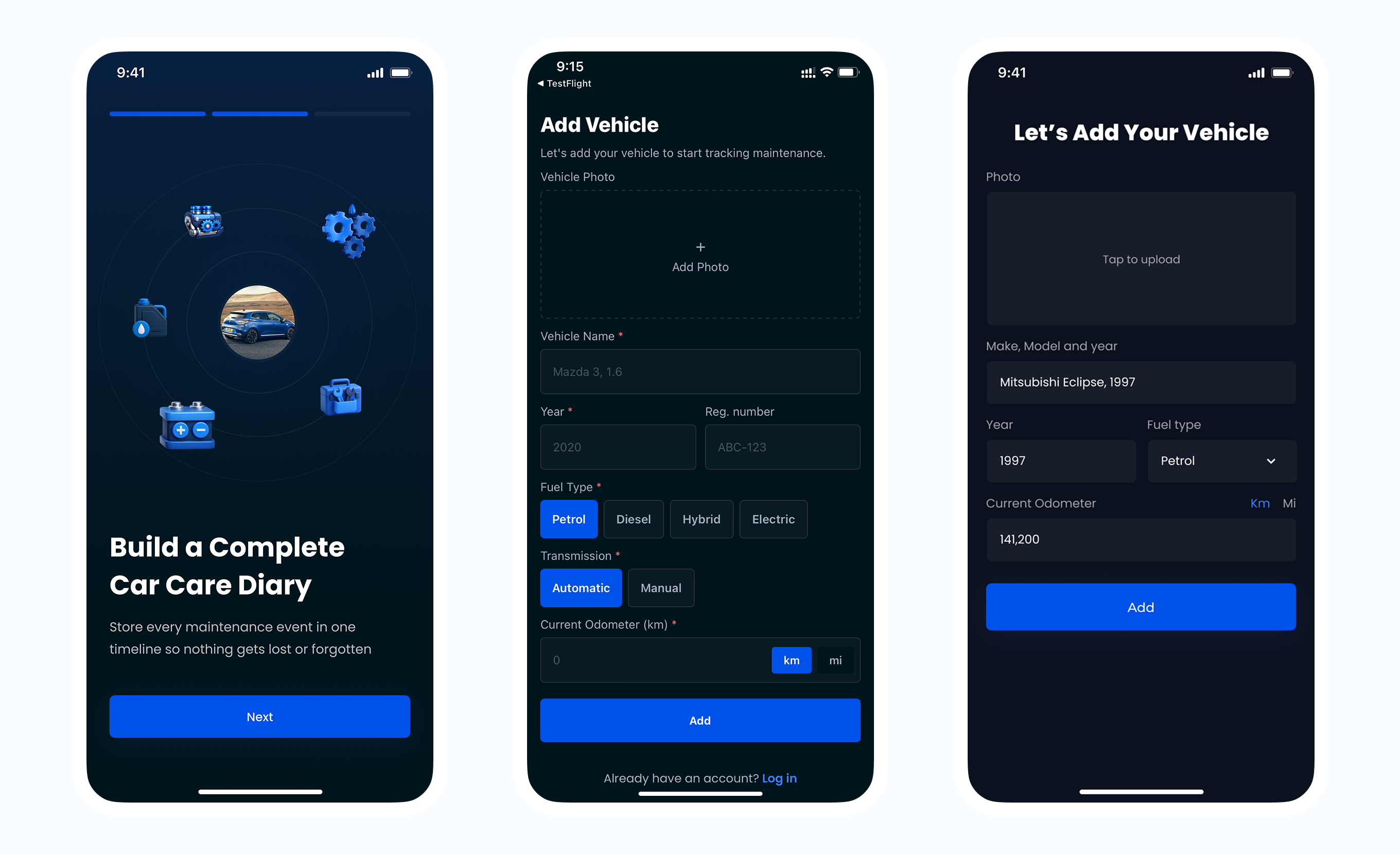
After launch, a central challenge appeared: many people could add a vehicle and initial information but did not always return to record new activity.
I ran user interviews, read feedback and looked at behaviour patterns to hypothesise where activation and retention friction might be - especially around the first meaningful record after setup.
That led to ongoing work on onboarding, in-product guidance, simpler paths into logging, and reminder and re-engagement strategies.
04
Building with AI
I extended my role beyond conventional design and used AI-assisted development to build and maintain production software.
With Cursor and coding models I implement functionality, work through architectural decisions, debug issues, iterate on UX details and prepare store releases - in React Native, Expo, TypeScript and Supabase.
That lets me move directly between design, implementation and testing. The AI is how I build and maintain the product. The product itself is a vehicle record.
05
Learning to grow a product
Shipping the application was only part of the challenge. I also took responsibility for attracting users, communicating value and testing monetisation.
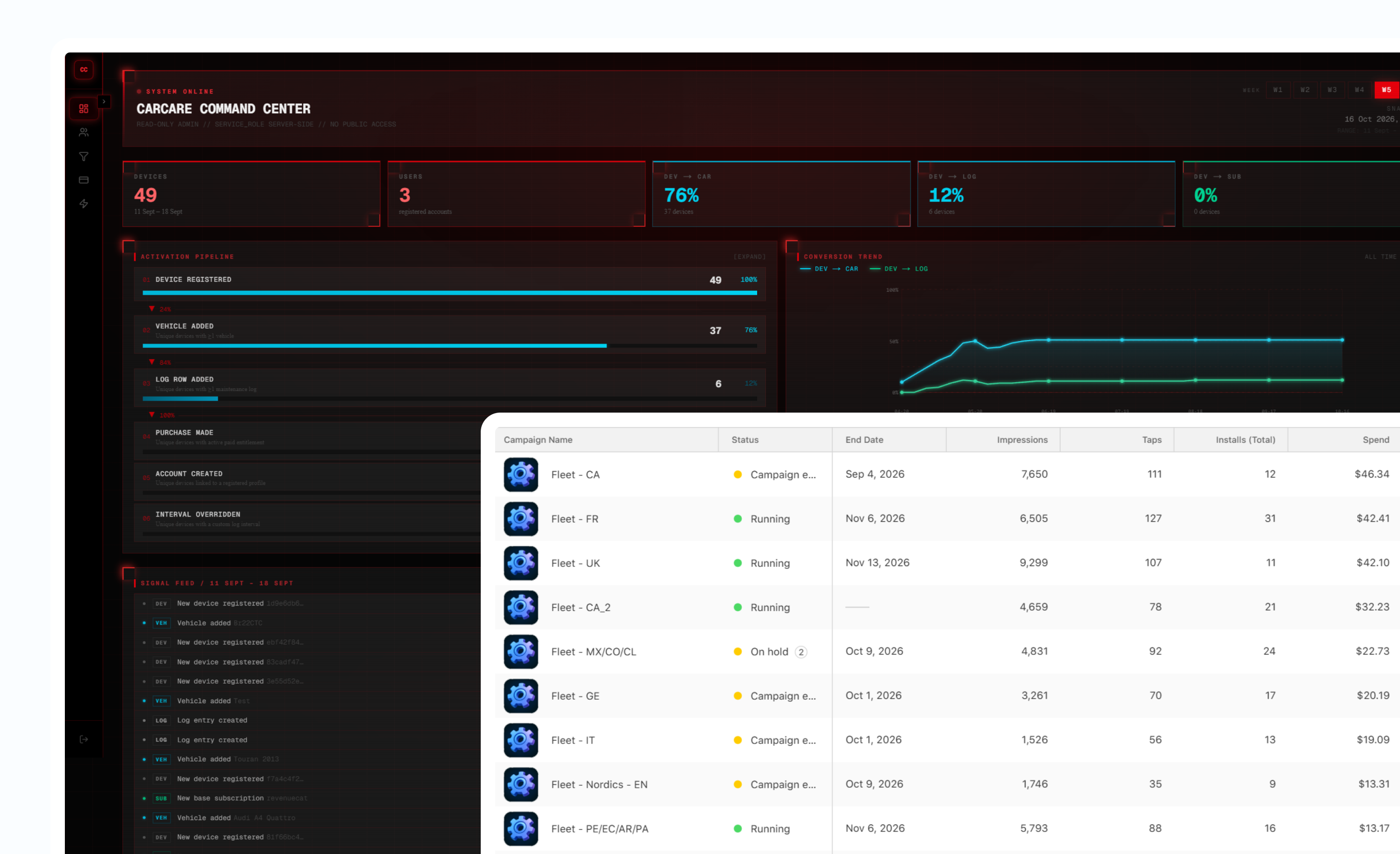
That included Apple Search Ads, creative experiments, custom product pages, App Store optimisation, localization and subscription pricing.
I tracked spend, impressions, taps and installs by campaign, and I paired that with an activation funnel: a device registered, a vehicle added, a log created, and whether that became a purchase.
Reading those two views together changed what I tested next in positioning, onboarding and the path to the first record.
06
Expanding beyond individual users
The product began with individual vehicle owners, but multi-vehicle use cases - including small businesses - suggested a different positioning and feature emphasis.
I expanded public messaging and in-product flows toward fleet-style needs, including dedicated landing pages on the CarCare Diary site for US fleet and fleet-management audiences.
Separately, I am developing an AI-assisted go-to-market workflow to research prospective companies, qualify fit and prepare personalised outreach. That workflow is still in development.
07Outcome
CarCare Diary is a real product on iOS and Android with more than 1,000 users across platforms, based on my internal figures.
I continue to own its design, development, research, releases and growth experiments.
The most valuable outcome for me has been expanding from designing software for clients to independently owning the full product lifecycle - including the technical and commercial decisions that determine what gets built next.
Contact
Open to Senior Product Designer roles.
If you are hiring a senior product designer for complex B2B, SaaS or AI-powered client work, I would like to hear from you.
- linkedin.com/in/rrrshimin
- Location
- Montenegro (Remote)
- Availability
- Open to Senior Product Designer roles at international digital product agencies.