Case study 05 · B2B SaaS · Geospatial UX · Data Visualization · Product Design
Agricultural Intelligence Platform
Turning complex agricultural operations and scientific data into an intuitive digital workspace.
- Industry
- Agriculture
- Platform
- Web
- Expertise
- B2B SaaS · Geospatial UX · Data Visualization · Product Design
- Role
- UX/UI Design, Appello
01Overview
An agricultural management platform connecting farm properties, laboratory results, nutrient analytics and operational recommendations.
The project was about translating specialised agricultural processes into a connected digital experience.
My responsibility was to understand the client's business, organise complex data and workflows, and design interfaces that made scientific and operational information easier to navigate.
Scope
- Domain research into farm operations, sampling and nutrient terminology
- Information architecture for clients, properties, blocks, results and recommendations
- Map-based workspace connecting locations with operational records
- Interfaces for laboratory results, historical trends and nutrient recommendations
- Iteration with stakeholders as requirements developed
- Team
- Designed at Appello with the client's stakeholders.
02Domain
Understanding an unfamiliar industry
The client came with business goals and limited product specifications.
Before designing the experience, I needed to understand how the consultancy operated: managing farm properties, collecting samples, interpreting laboratory data and preparing nutrient recommendations.
That meant researching unfamiliar concepts, walking through existing workflows and clarifying requirements with stakeholders. I turned that into product structures, user flows and practical interface directions.
03Map
Connecting operations through the map
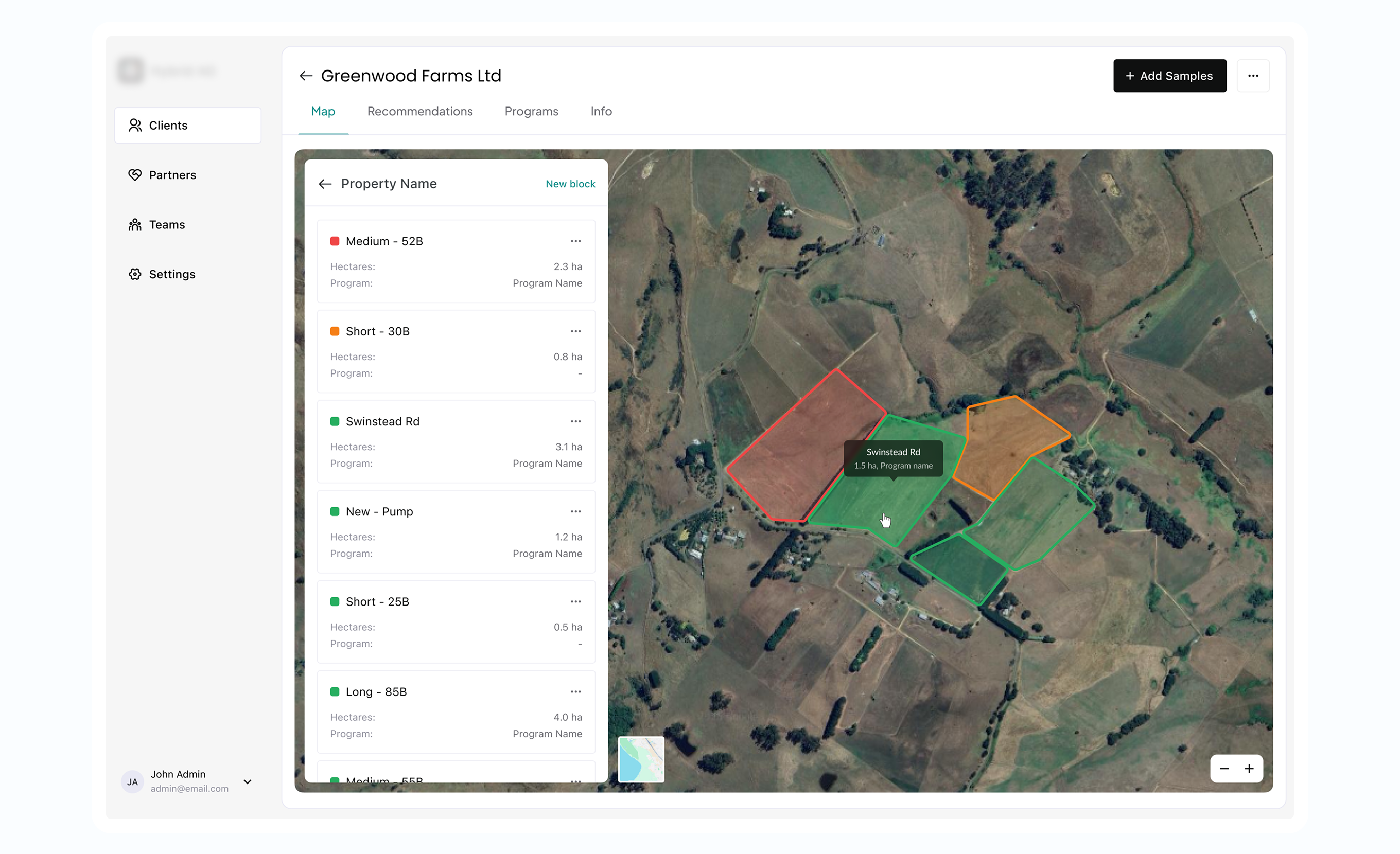
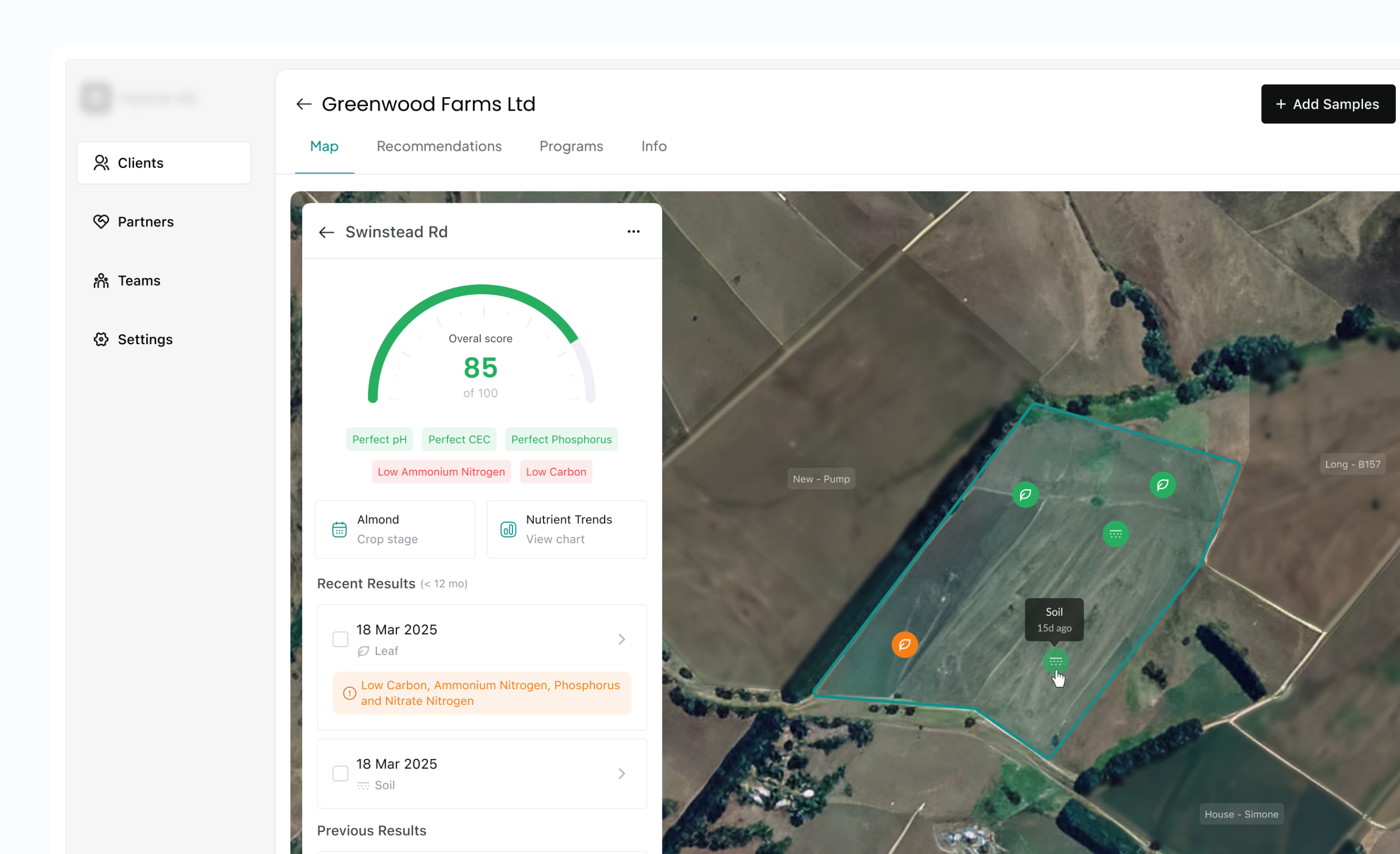
Agricultural data is tied to physical locations. I designed a map-based interface organised around clients, properties and individual blocks.
Fig. 01 is that workspace: colour-coded boundaries on the satellite map, with each block's area and program in the list beside it. Selecting a block opens its record without leaving the property.
The difficulty was holding a lot of spatial information and still keeping navigation and the contextual panel understandable.
04Analysis
Making scientific data understandable
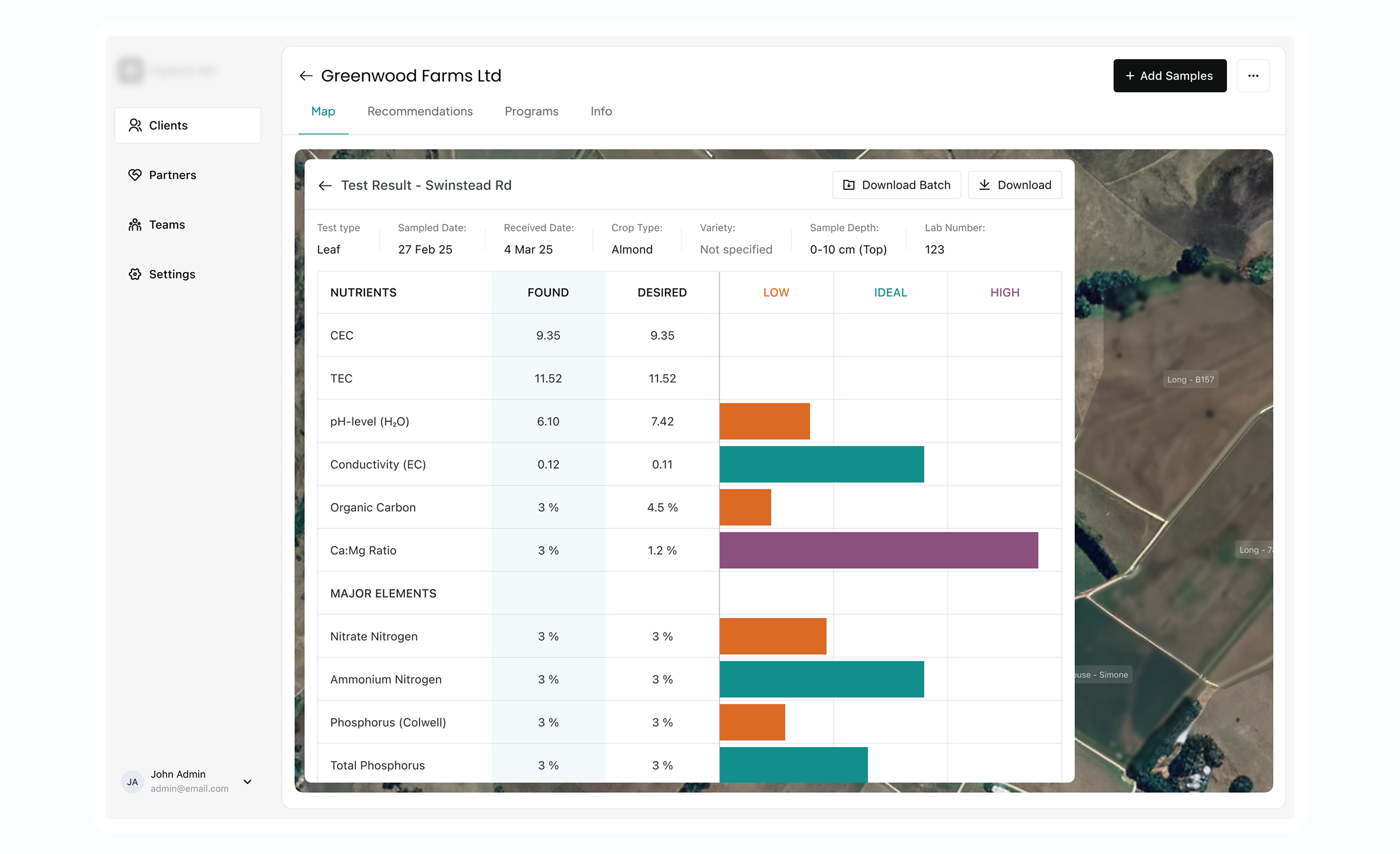
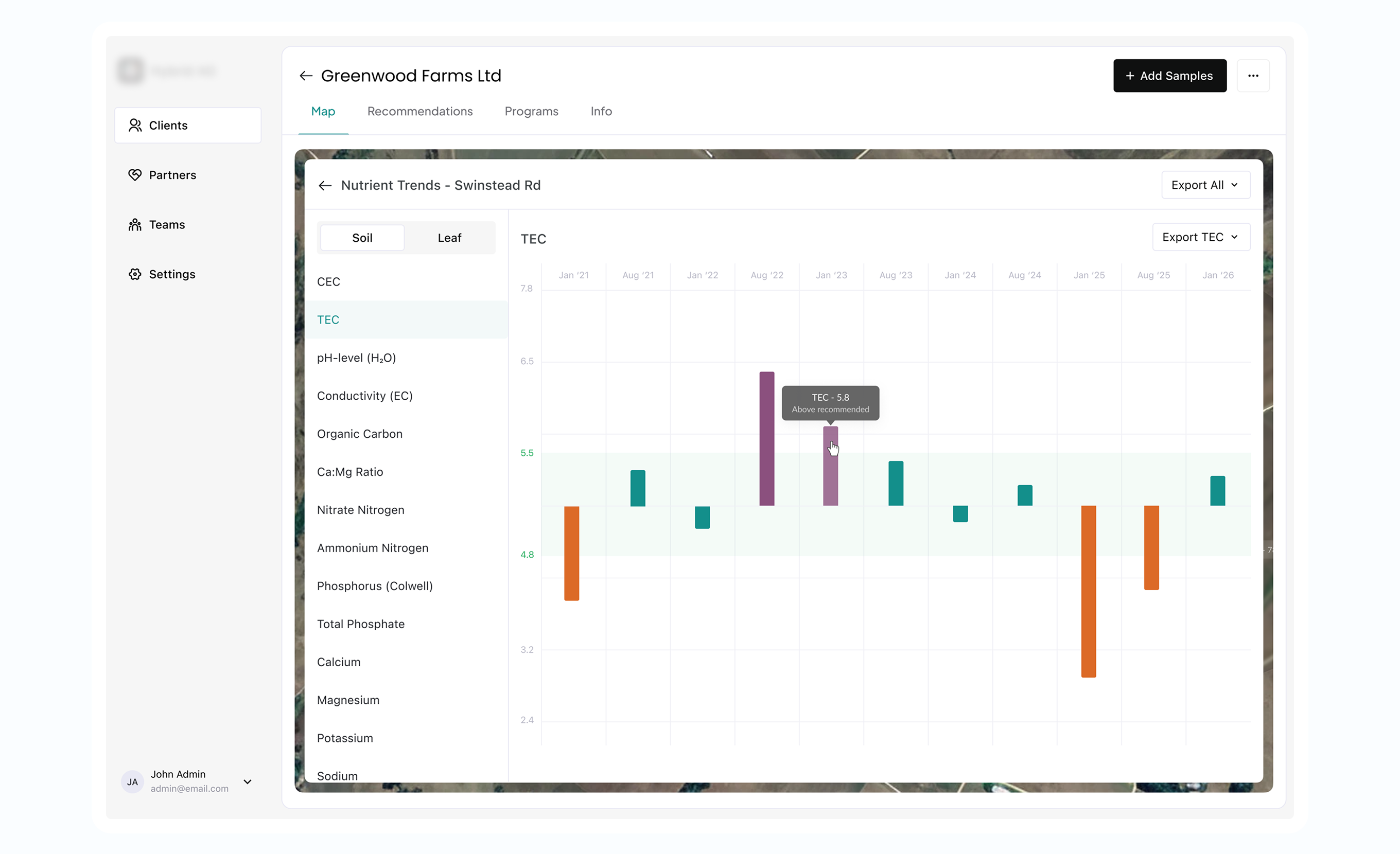
Soil and plant testing produces a lot of technical information: nutrient measurements, expected ranges and historical results.
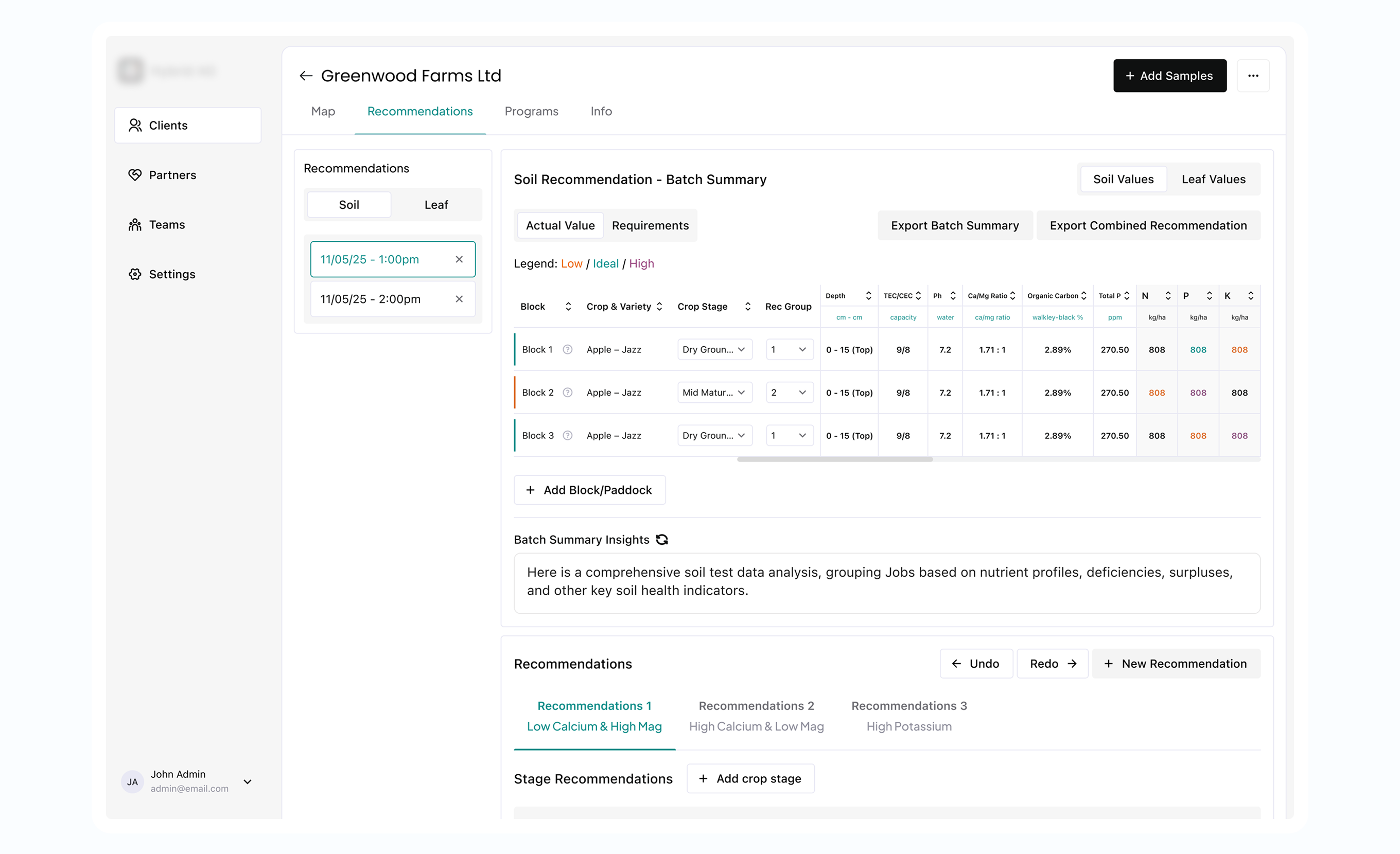
I designed screens for reviewing one test, comparing a measurement with a desired level, exploring how a nutrient has moved, and working on the recommendation that follows.
The work was hierarchy and visual indicators, so dense scientific data could be read as a structure rather than a spreadsheet dump.
05Definition
Translating requirements into the product
Requirements kept moving. I mapped how clients, properties, blocks, samples and recommendations relate, explored where a new capability should sit, and refined the practical version with stakeholders.
That back-and-forth is a normal part of the agency work: learn a specialised business quickly, then turn an ambiguous brief into a coherent product structure.
06Reflection
This is agency work in an unfamiliar industry, starting from business goals rather than a finished specification. The desktop workspace connects farm locations, laboratory results and nutrient recommendations.
Contact
Open to Senior Product Designer roles.
If you are hiring a senior product designer for complex B2B, SaaS or AI-powered client work, I would like to hear from you.
- linkedin.com/in/rrrshimin
- Location
- Montenegro (Remote)
- Availability
- Open to Senior Product Designer roles at international digital product agencies.